Posts

Showing posts with the label Ten Commandments

The "Simple" Commandment to Love

"The commandments, 'You shall not commit adultery; You shall not murder; You shall not steal; You shall not covet'; and any other commandment, are summed up in this word, 'Love your neighbor as yourself.'" The things God wants from us don't comprise a lengthy list of rules and regulations. What God wants is simple to say but hard to do. You can sum up everything God wants from you with one word: Love. It says it all. Love God. Love people. End of story. Of course the logical question that follows unearths the difficulty of obeying this simply-spoken command: What does it mean to love? This is why we need the Bible—not to burden us with lengthy lists of rules but to demonstrate what love looks like. In the Bible we see how God patiently waits for, disciplines and blesses people. In the Bible we learn how Jesus demonstrates love by laying down his life. In the Bible we discover the consequences of making loving choices versus those of making selfish ch...

Ten Words #10: Curb Your Desire

Image
"You shall not covet." The final word in the Ten Commandments loops us back to the first words. This command points once again to the primary question of the Decalogue. Can we be content with serving God and God alone? Or do we feel that we need to take matters into our own hands, placing ourselves on the throne of glory? Desire can be good. It can push us to perform well, to expand our skills, and to accomplish things that require extra effort. God made the world good. It's filled with pleasant things that are delightful to see, touch and taste. Texts such as Song of Songs highlight the inherent beauty of relationships and the passion that accompanies them. This is a good world that God made, and we should enjoy it. But desire slips from healthy and good to deadly and evil when we fail to control it. Desire becomes evil when it infringes on the rights of others, or when it harms our neighbor. In opposition to what some evolutionary scientists seem to think, desi...

Ten Words #9: Living in the Truth

Image
"Don't bear false witness." The original context of the 9th Word appears to deal with "courtroom" testimony. Jewish law took great lengths to protect individuals from false witness. A single person's word was never enough to condemn another person. At least two corroborating sources had to agree. The idea of the Ninth Word goes deeper than not lying in court. While deception is the central prohibition, there is much more. God’s people are to exemplify a commitment to truth-telling. Living a lie can wreak mass havoc. Enron hid the truth about their schemes and destroyed the fiscal well-being of countless groups & individuals. Some folks misled the world about weapons of mass destruction in Iraq, and the world continues to pay a high price for actions even if taken in good faith but based upon those lies. Family relationships and even churches often conceal hidden truths, giving power to the lies that control them. In Death of a Salesman , B...

Ten Words #8: A Den of Thieves

Image
"You shall not steal."  Finally, a command we can all agree with. Who doesn't agree that stealing is wrong? Every society in every place throughout the world and throughout history has had prohibitions against theft. But the problem is that not everyone agrees on what it means to steal. Is it stealing to download a song you were supposed to pay for? Is it stealing to regularly trim 30 minutes off your work day? Is it stealing to be dependent on welfare rather than on a job? Is it stealing for one country to use the majority of the world's natural resources? Is it stealing to keep the $10-dollar-bill that the clerk accidentally gave you in place of a $1-dollar-bill? Theft is often relativized according to the position in which we sit: > Some who would never dream of mugging a person on the street think it is okay to cheat on their taxes or ask their 13-year-old to pretend to be 12 so they can get the kids' price at the movie. > Some students ...

Ten Words #7: Marriage, Sex & God's Justice

Image
The 6th & 7th commands are perhaps the most well known: Don’t murder & don’t commit adultery. But does the fact that they are easily identified mean that they are easily lived out?   Just as murder violates one’s neighbor and destroys the social fabric of the community, adultery is also a severe violation of the trust and wellbeing between neighbors. It has a chilling effect beyond the individual actors, damaging the loyalty and affection of the entire community. Loyalty and affection are the primary building blocks of each family, and families in turn are the primary building blocks of a society. Tearing the family through sexual infidelity, therefore, is an attack on the whole community. For Israel, the commandment was clear, but the penalty for breaking it was applied unevenly or not at all. Some texts state that both parties were subject to the death penalty (e.g., Lev 20:10). But it’s not hard to find examples where this was ignored or applied harshly only to ...

Ten Words #6: The Sanctity of Life

Image
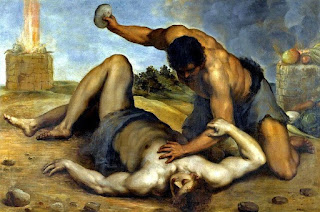
The last five commands are short and relatively straightforward. All told, these rules undergird the social fabric of the believing community. While their hypothetical meaning may seem plain, their enactment in real life is much more complicated. After Adam and Eve were cast out from the Garden, we find the story of Cain and Abel. The text does not adequately explain why Abel's gift was more pleasing to God than Cain's. People propose all kinds of possibilities: Abel brought his best while Cain gave something average; Abel's heart was in the right place while Cain's was not; and so forth. In truth, we don't know. The narrator only tells us that Cain's gift was not regarded by God. There's no clear rationale. The reason is irrelevant. This tale is not primarily about how to offer a pleasing gift. It’s about what happens when anger and jealously well up within us as they did within Cain. His rage was so apparent that God actually confronted Cain, to...

Ten Words #5: Honor Your Parents

Image
With the 5th word, we move from the first tablet of commands to the second. The first focuses on our vertical relationship with God. The second tablet deals with our horizontal relationships within the community. This is the only commandment that contains a promise. Respecting one’s parents somehow leads to a sense of blessing in this life. But what exactly does this promise mean? And how do we respect our parents? First, remember that these Ten Words weren’t delivered to Mrs. Murphy’s Sunday school class. Do you remember Mrs. Murphy’s Sunday school class? The name isn’t important, but you know the kind of teacher I’m talking about. She’s the one who taught you the books of the New Testament, made you quote the twenty-third psalm in old English, and told you to obey your parents. Without ever telling you it was the fifth commandment, she put the fear of God into you as she prompted you to mind your mom and dad. I know what you’re thinking: “If only our world had more Mrs...

Ten Words #4: Rest & Remember

Image
"Observe the sabbath day and keep it holy." If there was a reason for why we discarded the Ten Commandments in the church of my youth, this fourth word was it. We don’t keep sabbath. In support of this, we quoted verses such as Col 2:16, "Do not let anyone condemn you in matters of food and drink or of observing festivals, new moons or sabbaths." Christians in our tribe took this to mean that we should celebrate no religious days: no Christmas, no Easter & certainly no sabbath. We also explained away sabbath by contrasting the old "Mosaic dispensation" with the new "Christian dispensation." Sabbath, or so it was told, was part of the old while Sunday church services were part of the new. It was all very matter-of-fact with a single, clear conclusion: We don’t observe sabbath! But this simplistic view of sabbath misses the point. Sabbath is not a useless relic of the Mosaic law. Sabbath is not a holiday with pagan roots, not a ...

Ten Words #3: Don't Misuse My Name

Image
"Don’t make wrongful use of the name of the Lord your God." Rules are subject to many interpretations and applications. If laws were easy to understand and follow, we’d have no need for a Supreme Court. For ancient Jews and modern Christians alike, it’s not easy to apply commandments such as this one. Many Jews believed that God’s actual name was so sacred that they dared not misspeak it. They went to such great lengths that they refused to even speak or in some cases write the divine name YHWH. They believed this was a way of honoring the third commandment. When I was a kid, folks interpreted this in a similar manner. We got in trouble for saying the name of Jesus or God in a flippant manner. Combining God’s name with a curse word was a horrendous sin! Even speaking replacement words like geez or gosh was cause for harsh rebuke from my parents. This is how we took care to not make wrongful use of God’s name. While I still believe it’s a good idea to sp...

Ten Words #2: Don't Box Me In

Image
The second commandment is “Do not make for yourself an idol.” Idols. If any commandment is a slam dunk for us, this should be it. I mean, how many church members have an idol sitting around their house, office or school locker? And even if they did, would they actually worship such a thing? This word doesn’t seem much different from the previous one. Some religious listings of the Ten Words combine the first two into a single command. So what’s the deal with idols, and how does this apply to us today? Idols are symbols of divine power. They point to and remind people of infinite & imperishable things. Symbols come in different forms. They are powerful reminders of bigger realities. It’s natural to want to create & collect them. Companies create logos. Travelers collect mementos. Parents make scrapbooks and picture albums. These symbols remind us of bigger realities. But there’s a fundamental flaw with symbols. They allow us to control things that are too big to...

Ten Words #1: No Other Gods

Image
The first commandment is “You shall have no other gods before me” (Exod 20:3). As we plow into the Ten Commandments or 10 Words (in Hebrew), we arrive at this very simple statement. What does it mean? Don’t we already know that there are no gods but God? Is this word even relevant for us? This begs a very important question: Are there other gods? I’m guessing that not many of us worship Baal or Molech or Ra or Artemis or Zeus. Most of us have come to believe that there is no other god. We are not like “primitive pagans” or animists who believe in various spirit gods or who worship the earth as if it were a god. Are we off the hook? Is it possible to say that this is remedial territory for us and that we have progressed far beyond this first command? “Not so fast,” says the apostle Paul! In Romans 6, Paul discusses the tension between being a slave to sin versus being a slave to righteousness. The two are incompatible, Paul writes, yet some Christians apparently misunder...

Ten Words for Today, Intro

Image
I'm starting a new sermon series on the Ten Commandments (or "Ten Words" in Hebrew). This week is the intro. After that, I’ll take the commandments from Exodus 20 & Deuteronomy 5 one by one. I’ll flesh out their meaning for the church & for us today. Culture wars are ripping through our country. It’s not hard to feel the partisan anger. Some politicians & presidential hopefuls are feeding off the feelings of many disgruntled people. This is a season of discontent for many who think that the country has “gone to the dogs.” For some groups, the symbols of unrest & protest are things like the Pledge of Allegiance, prayer in schools, the flag and—think of it—the Ten Commandments. Yes, I said the Ten Commandments. As hard as it may be to fathom, the ability (or lack thereof) to post the Ten Commandments has become a litmus test to many people in our country: > Do you love what America stands for? If yes, then post the Ten Commandments! ...